Maximizing Fleet Uptime: 6 Operational Insights from the Pilot
For a bike-share operator, the math is simple: Revenue is generated when bikes are on the street; costs are generated when they are in the workshop.
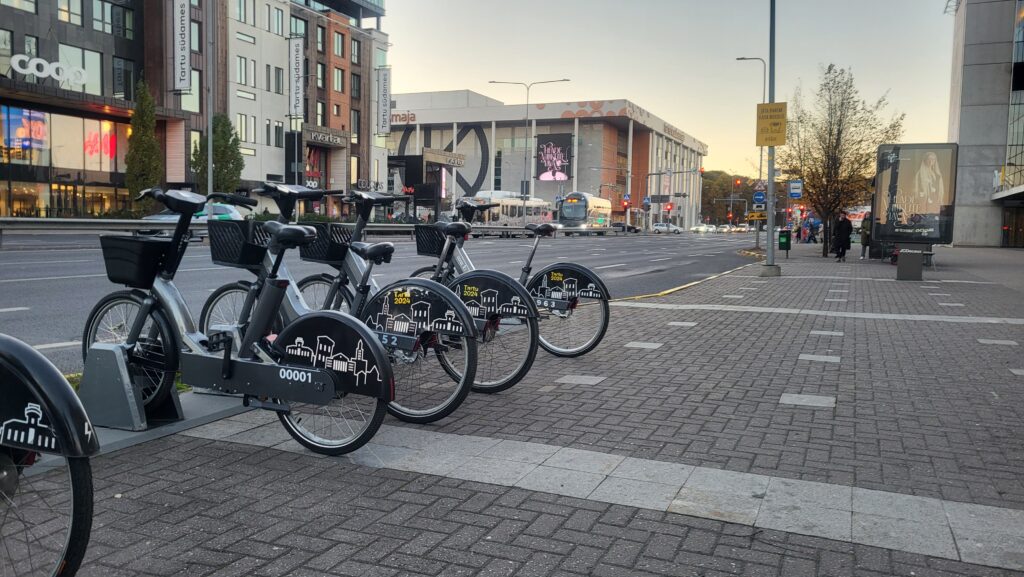
To truly bridge the gap between design and daily operations, our Head of Engineering, Rando, spent the duration of our recent pilot in Tartu working directly alongside the local fleet operators. By documenting every “touch” and observing the hardware through the eyes of the mechanics, Rando helped translate our engineering choices into real-world performance data.
The results highlight how specific design choices—like modularity and high-range battery integration—directly impact an operator’s bottom line by reducing “touches” and extending the lifecycle of the asset.
The "Preferred Ride" Effect
The Finding: We observed users specifically seeking out Ilus bikes even when other options were available.
The Operator Win: High utilization is the primary driver of ROI. When users prefer your hardware, your bikes spend less time sitting idle. This organic demand reduces the need for aggressive marketing spend and ensures your fleet remains the “first choice” for daily commuters.
Feedback as a Growth Driver
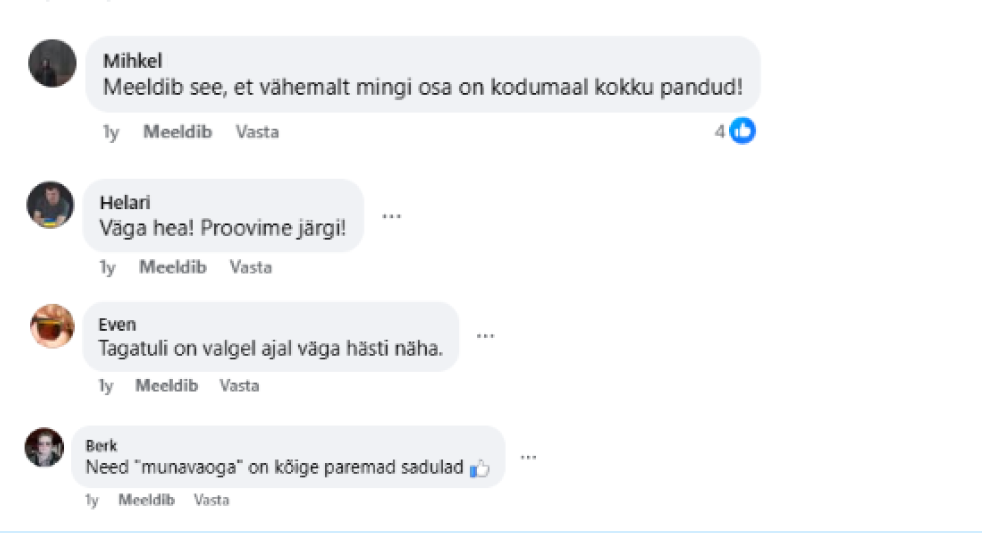
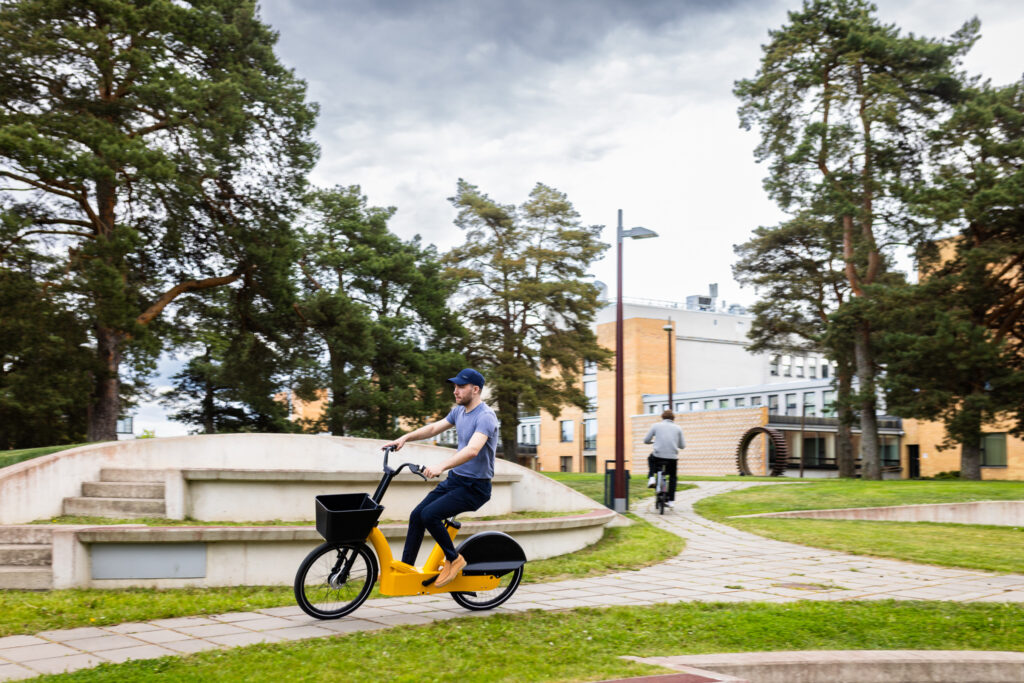
The Finding: User surveys and public comments highlighted the European-made quality and ergonomic riding position.
The Operator Win: Positive word-of-mouth is the most cost-effective way to increase revenue. In a competitive market, reputation is your moat. Satisfied riders are more likely to become subscribers rather than one-time users. Additionally, happy riders treat the equipment better, which leads to lower instances of “behavioral” damage and misuse.
The "Face" of City Safety
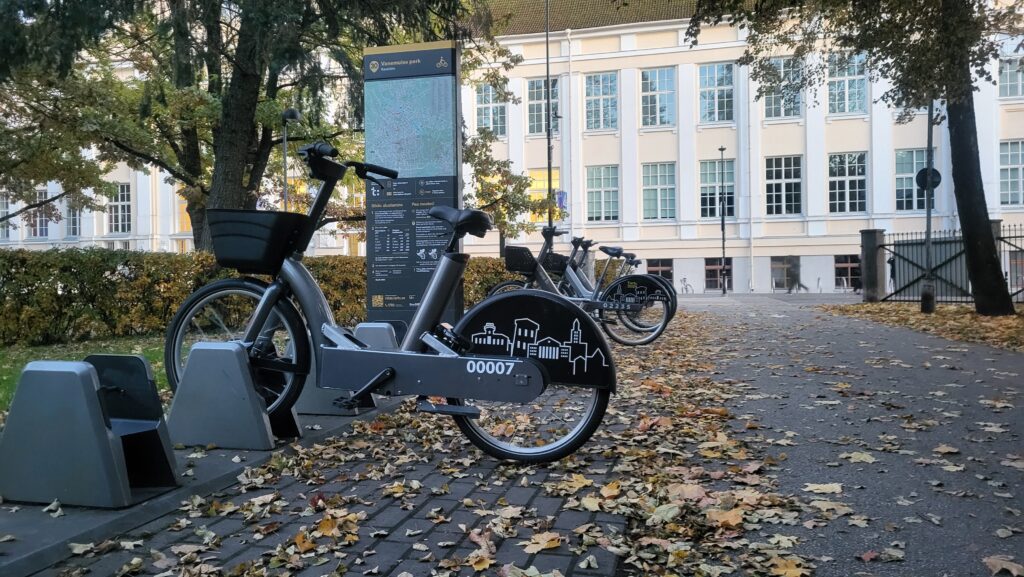
The Finding: Tartu’s official social media team chose Ilus bikes as the primary examples for their safety and promotion videos.
The Operator Win: For private operators, the relationship with the city is a major business risk. When the municipality views your fleet as the “gold standard” for safety and aesthetics, it secures your “license to operate” and puts you in a pole position for contract renewals and expansions.
Zero Vital Part Failures
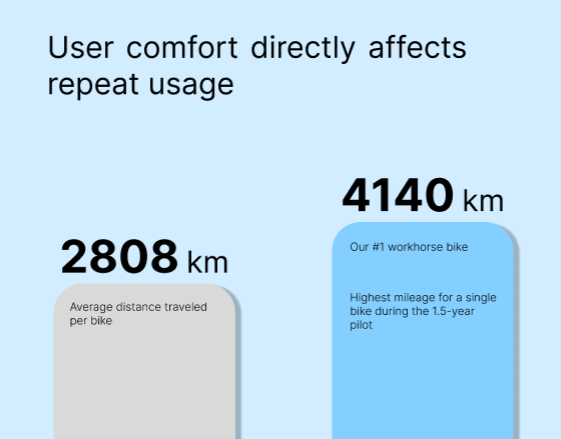
The Finding: Despite an average of 2,800 km per vehicle (with some reaching 4,140 km), zero frames or electronics were damaged. Vandalism was limited to easily replaceable “sacrificial” parts like baskets and grips.
The Operator Win: This is the core of long-term value. By protecting the “vital organs” of the bike, we ensure the fleet stays on the street. Lower scrap rates and fewer total replacements mean a significantly lower Total Cost of Ownership (TCO) over a 5-to-10-year horizon.
High-Utilization Readiness
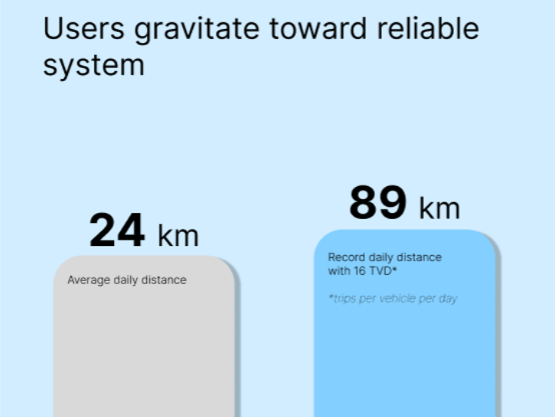
The Finding: Our bikes handled up to 89 km of riding in a single day—roughly six hours of non-stop use—supported by our 100 km range and optional integrated docking charge.
Why it matters to Users & Operators: High range eliminates “range anxiety” for the citizen, allowing for longer cross-city trips. For the operator, it maximizes revenue per asset, as the bike rarely needs to be pulled from service for charging or battery swaps. You can serve longer trips and higher demand without increasing your field team’s workload.
Two-Hour Training: The Power of Intuitive Maintenance
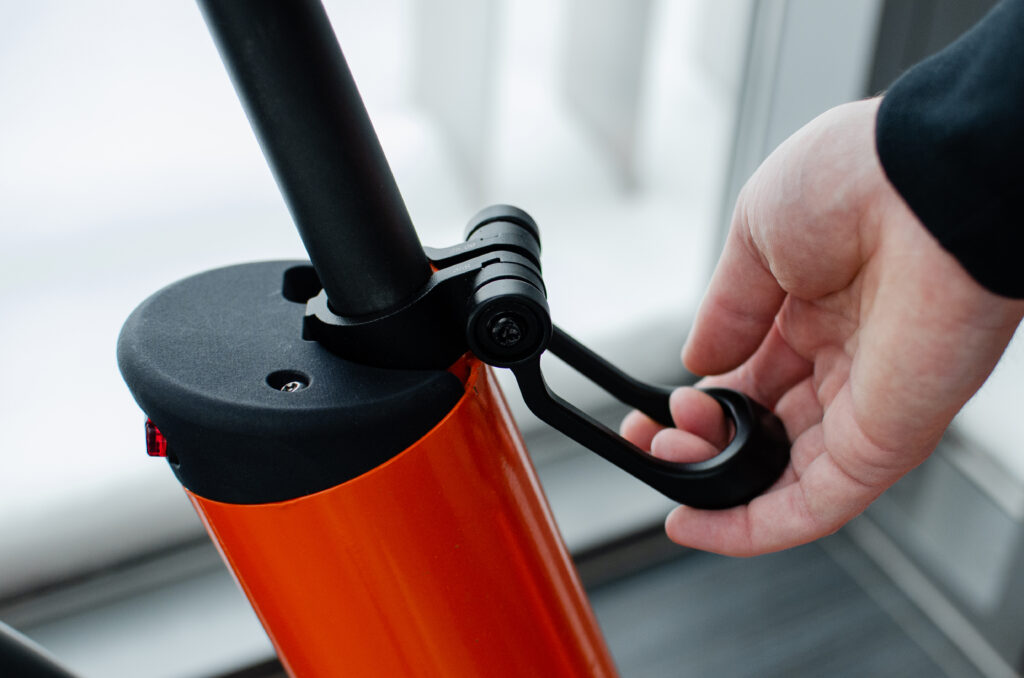
The Finding: A new maintenance team required only a two-hour briefing to become proficient with the Ilus system.
The Operator Win: In a sector where labor turnover can be high, intuitive design is a financial safeguard. Reducing the “learning curve” means new technicians become productive immediately, minimizing downtime and ensuring the fleet remains at peak uptime from day one.
The Bottom Line
The Pilot proved that when you prioritize modularity and rider comfort, the operational benefits follow.
We aren’t just building bike-sharing systems; we are providing a reliable foundation for city life.
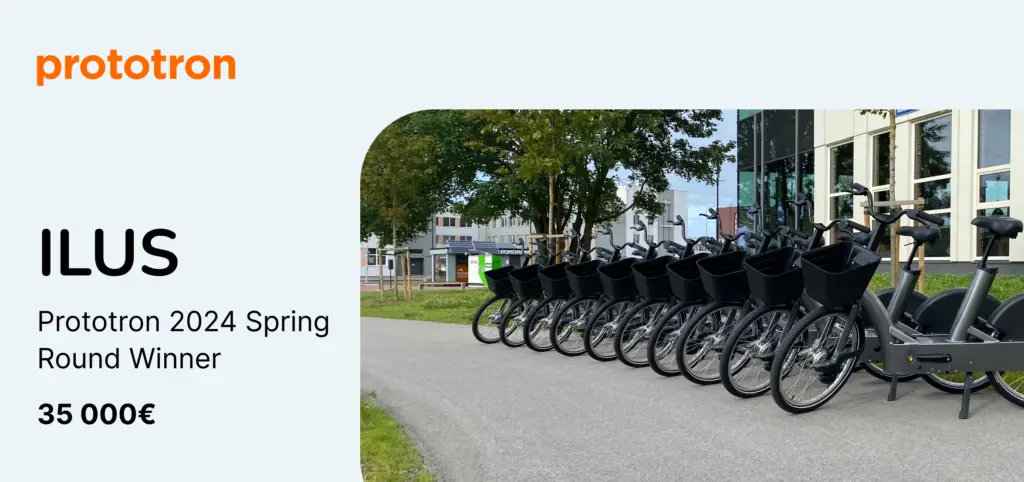
ILUS has been selected as the winner of the Prototron 2024 Spring Round, receiving a €35,000 grant to…
Intuitive User-Experience and Comfortable Ride
We’ve removed every barrier between the user and the ride to ensure your fleet is the first choice, every time.
Higher Retention
Users are more likely to return to a system that feels like a natural extension of their commute rather than a technical hurdle.
Reduced Support Load
A simpler user experience leads to fewer “how-to” support tickets and accidental “unlocked bike” reports.
Increased Spontaneous Rides
By removing the mandatory onboarding process, you capture the “walk-up” market that other systems lose.
Comfortable Upright Position
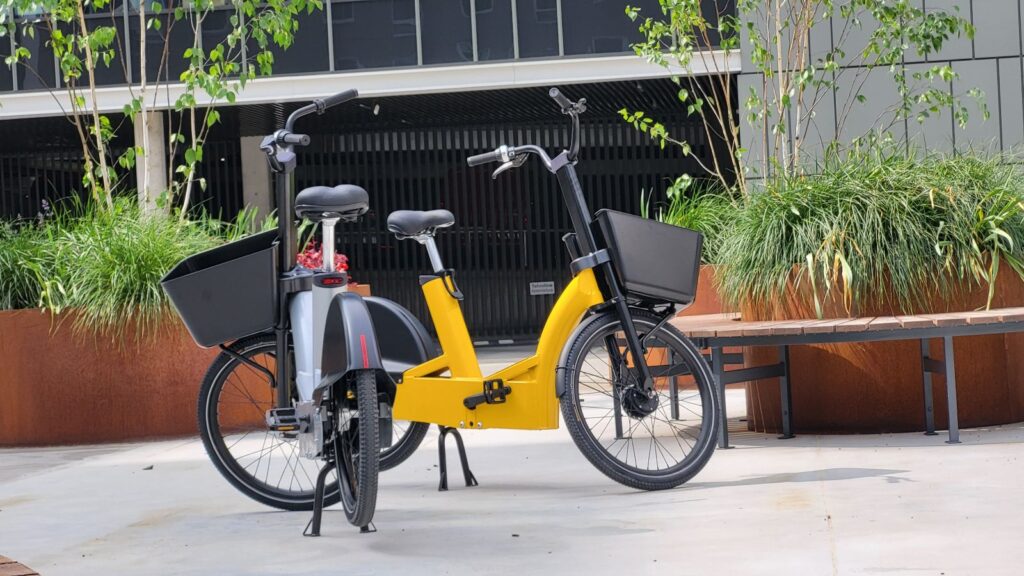
Our frame features an ultra-low step-through and an upright riding position, making the bike inclusive for all body types, ages and clothing choices, including skirts and long coats.
Zero-Effort Locking
We replaced clumsy manual locks with an automated hub-locking system that secures the bike the moment a ride ends. No more unlocked bikes that has huge potential to get vandalized.
No-Contact with Grease and Moving Parts
By enclosing the entire drivetrain, we ensure that users never have to worry about grease or debris on their clothes